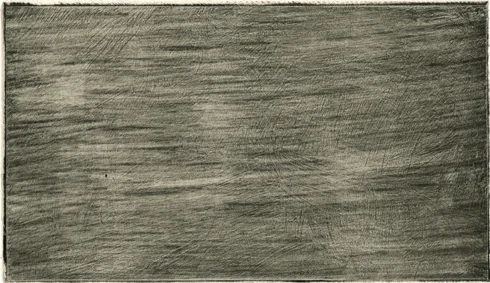
Linden Row Show by Joe Olney

range

Range  wood  12x16split landscapes

Gristle in place  wood, gesso, encaustic, acrylic medium 12x16wood 3

Neither here nor there  wood  12x16eye for eye

An arm and a leg and an eye for an eye  wood and encaustic  12x16 

wood 2

Speak English, will you Doug wood and encaustic  12x16

Above are five pieces that are in the show at Linden Row. Here are the details if you would like to see them in person:

Who: Terry Brown, Janis Goodman, Joe Olney, Martha Saunders, Paul Thulin, and Randy Toy
What: The American Landscape
When: January 18 – April 29; opening is February 1, 5-9pm
Where: 100 East Franklin Street Richmond, VA (across the street from the Richmond Public Library)
For more info: http://www.1708gallery.org/education-and-outreach/satellite-exhibitions.php

Wee toddlers... by Joe Olney

P1060391P1060389P1060387Wee Toddlers...  text stamped into wall  approx. 6x9

Here's another wall piece that I did. This time I was bit more conscious about where I installed it, although I'm sure the VCU Fine Arts Building stairwell is not the best venue for it.

Some of my classmates have been kind enough to inform me that even though these text pieces are hard to see, once you know they are there, it's hard not to look at them. I like that aspect of the work very much. I find that my past is something that's also invisible that constantly reaches out for my attention. I constantly think of the things I witnessed and it's nice to have made a piece that has a similar silent, nagging, insistent presence. Hopefully it serves to shed some light on what it's like to be caught up in the largely unnoticed wars we have fought and continue to fight abroad.

For clarity, here's the text:

WEE TODDLERS DON T CRY IMMEDIATELY

WHEN YOU DROP THEM DOWN A FLIGHT

OF STAIRS I KNOW THAT NOW

AT THE TIME IT SEEMED LIKE A

GOOD IDEA FOR ONE TO CARRY THE

OTHER BUT IN THE END ALL THOSE

STAIRS AND ALL THAT WEIGHT GOT

THE BEST OF IT  EVENTUALLY IT

DID CRY  EVEN THOUGH IT WAS A

PAIN IT WAS A RELIEF

BUT NOW I WONDER IF IT EVER

LEARNED ITS OWN NAME

I WONDER WHAT YOU CALL IT

The Oldest People I Ever Met by Joe Olney

P1060405P1060397 P1060404oldest and heads

The Oldest People I Ever Met  text stamped onto wall  approx. 5x18 inches

Last semester I realized that painting pieces about my experiences overseas limited me in what I could get across. Therefore, I decided to explore these feelings in writing. I have found that I'm getting more and more comfortable with confronting some of the tough stuff, and I feel good about that.

Much like the act of sanding in my wood pieces, stamping each letter into the wall with the reinforced steel metal stamp is a meditative act that demands discipline and concentration. As the hammer strikes the metal pin, an echoed, pounding sound bounces off the walls and reminds me of the usually off-target, intermittent indirect fire that was periodically lobbed onto the bases we occupied. A little reminder that they hadn't forgotten about us.

The subject of these works is the loss of innocence. We soldiers certainly lost a fair amount of ours as the bulk of us were just kids in our own right and had never seen any combat. But we weren't the only ones growing up. I guess everyone was gets older fairly quickly in places like that, but the children over there really had to grow up fast. I felt they had decades on all of us.

I haven't studied enough poetry to understand how best to write these passages. I'm hoping to go to a workshop at some point through the Veterans Writing Workshop (http://veteranswriting.org/) in DC to tweak them and get some other ideas going about ways to tackle this subject matter within the medium of writing literature.

However, there were some things that I tried to keep in mind while making these like how the text is basically invisible until you get right up to it; the lack of punctuation and what how that effects the read of it; the font and the connotations it might have (this is pretty subtle, but if you've had dog tags before, then you might recognize it); and the way in which the lines are broken up to affect the pace of the read. I also wanted the tone of them to be somewhat matter-of-fact; to be dry and distant. I think this does two things a) it pits a sympathy in the reader for these kids' plight against a seemingly unsympathetic disconnectedness in the author and b) it uses the same simple vernacular that we used overseas. By the end of our tour a lot of us were pretty disillusioned about the true nature of man, about our "good guy" status, and all of that and ultimately it affected everything; even the way we communicated. Sentences got short and to-the-point with plenty of cursing to drive the point home. And dwelling on things or "bitching and moaning" didn't really help, so you speak your piece and then kindly "shut the fuck up". No one wanted to hear you verbalize what they were trying not to think about. In the short term, it's a pretty effective system. But over time it eats you up.

The reproduction of these passages may be difficult to decipher, so below you'll find what they say. However, it's important for me to point out that the high contrast black-and-white nature of the font  below is antithetic to what I tried to do in the actual work. It being a pain in the ass to read on the wall is an important part of the concept of this piece.

The passage on the left reads:

THE OLDEST PEOPLE I EVER MET

WERE THESE THREE IRAQI KIDS

NONE OF EM COULD HAVE BEEN MORE

THAN 12 YEARS OLD BUT THEY HAD

EONS IN THEIR EYES

THEY WOULD SELL US EVERYTHING

UNDER THE SUN – PORN SADDAM-ERA

UNIFORMS LOOTED ROMAN COINS-

THEY DEALT IN IT ALL AFTER WE

PULLED OUT OF THE BASE THEY

CALLED HOME THEY WERE DISPATCHED

AND IF THEY DIDNT SEEM SO

ANCIENT I WOULD SAY THEY

DIED TOO YOUNG

The passage on the right reads:

DO CHILDREN NEED THEIR HEADS

TURNS OUT THEY DO

THEY USE THEM TO PICK SIDES

FOR SOME REASON THEY PICKED OURS

THE FUCK WERE THEY THINKING

New series/new show by Joe Olney

 wood2JOwood1JOwood3JO wood4JOWood Series I-IV  sanded wood or sanded wood, gesso, encaustic, and gel medium  all approx 12x17

This is a series I'm working on for an upcoming group show at Linden Row Inn called The American Landscape. In the fall semester, I really started getting into sanded surfaces. In a piece I will post soon, I polished a gessoed canvas to a mirror finish. For some reason I enjoy the monotonous and repetitive process of refining a surface. When working with wood I find that there are countless mark making possibilities within the layers of plywood. This is nothing new. If you take a walk anywhere where there are exposed beds of sedimentary rock, you'll see the most amazing line work on the eroded surfaces. I had forgotten about that. For a long time, I haven't had an artistic outlet for my interest in geology, and I didn't want to force it. I wanted it to come about organically. And luckily for me it has. When I'm making these pieces I'm taken back to what I learned in my sedimentary and stratigraphy classes at William & Mary, my junior year field trip to Big Bend, Tx, Army desert training in the Mojave Desert in my active duty days, and, of course, my deployment overseas in the Middle East with the Virginia National Guard. And with those places in mind, these works (to me, at least) become as much about  landscape, topography, and geology as they are about meat, skin, fat, fir, and various types of wounds. I also enjoy the optical properties some of them possess. By sanding them at certain angles, the skewed orientation of them hopefully creates a tension in the viewer. However skewed they may look, though, the outer dimensions of them are all at right angles. I wanted there to be a  stabilizing counterpoint to the off-kilter quality that some of them exhibit. I will be making many more of these, and I'm excited to see how the series evolves as I experiment with scale and in the introduction of various mediums and wood types.

Here's the skinny on the show:

What: The American Landscape

Where: 100 East Franklin Street Richmond, VA (across the street from the Richmond Public Library)

When: January 18 - April 29; opening is February 1, 5-9pm

Who: Terry Brown, Janis Goodman, Joe Olney, Martha Saunders, Paul Thulin, and Randy Toy

For more info: http://www.1708gallery.org/education-and-outreach/satellite-exhibitions.php

war painting by Joe Olney

P1060368 P1060361 P1060365P1060374

war painting  copper wire and 90 stamped, stainless steel dogtags  approx. 48x50

I've been experimenting with text lately in my work. I feel that in some cases, certain mediums can get you closer to what you want to say than others. So I guess this piece is pointing out that painting in oil (as I have been doing for a few years now) is not an ideal medium for what I'm trying to do in terms of making work about my experiences overseas. But I'll qualify this by saying that I feel limited in oil painting and painting in general because of what I'm trying to say with it. Others may find painting to be the perfect medium for saying what they want to say. And indeed it's an amazing medium with many possibilities  However, when it comes to how and what I wish to communicate, painting just isn't doing it. And so, for the time being, I've moved on to more sculptural/installation projects.

I ordered a metal stamp kit and about 100 of the tags off Amazon. The text I used comes from the color names that oil paint manufacturers use. Names like "burnt umber" and "permanent green light" conjure up so many images from my time in the military. I get flashes of charred remains or the dancing shades of green of NVGs. The use of wire is a nod to IEDs and the way in which our "enemies" communicated with us. And of course the dogtags have their own history and significance. Light, shadow, and subtle movement also plays a part in this piece.

Until January 25th or so, this piece a few others of mine as well as some of my very talented friends' work will be up at Plant Zero on the southside. If you haven't seen it, you should check it out. The show is called "Good and Good for You". It's free and M-F it's open from 9am to 5pm.

This semester I was awarded a VCUArts research grant in order to expand this project. The final result should be about 5,000 dogtags or so. However, the text will most likely be from conversations I have with my army buddies and other veterans. My goal is to have the project completed and the venue where it will hang worked out by the end of next semester.

Cody by Joe Olney

Joe Olney_cody

Cody  oil on paper  17x22  (in traveling show)

Two months before I met him at the VA hospital, Cody had ten fingers and ten toes. But in January, 2012 a pressure-plate IED took out his legs above the knee and two fingers while on foot patrol in Afghanistan. Some classmates and I were at the VA to make work for a reportage drawing class we were taking. But I didn't really want to draw Cody while I was there. I just wanted to listen. The conversations you have with combat veterans who have been what he's been through and lived to tell about it are extremely intense and personal and matter of fact. It's difficult to listen when you're distracted by the process of making a drawing from life. I realize now that there's a place for listening and a place for drawing when doing this sort of thing. The drawing's important, but the core of the work comes from making a connection with someone. And with Cody that was easy. He was calm and kind and very generous with his time even though he had his family there who came up from North Carolina. He was present but also away somewhere. And understandably so. As we spoke, his little brother (maybe 12 y.o. or so) played a FPS war-type video game set in the Middle East on the hospital room's television, which was pretty surreal. Between explanations of where he was from and how he sustained his injuries, the sound of gunfire and explosions and the constant, frantic, frustrated tapping of the controller clicked in the background. I wanted him to shut it down, but I didn't say anything. Perhaps he was playing it to better understand his older brother's life or to prove he had what it took to be tough, too. If only it were that easy. I made this piece with psychological distance in mind - the distance between being whole and being fragmented, between the warrior mentality and the civilian mindset, between innocence and corruption, between who he was and who he is, between safety and danger, and between being lost and being at peace.

sinks by Joe Olney

Sinks graphite on paper 86.5x59.5

Following the lead of Mr. Diebenkorn I decided to make this large drawing. The dimensions of Diebenkorn paintings were often based on the extent of his reach.  And I thought working within the limits of my body would be an interesting experiment. Although the width of this drawing was dictated by the manufacturer, the width in general is not usually limited by one's body but by the length of the wall on which it hangs. Therefore, I didn't worry too much about the width, but the height is at my vertical limit which presented new challenges for me.

A favorite painting of mine is Diebenkorn's  Corner of Studio Sink, and I thought of it more than once while making this drawing.  From the title you can guess that it's pretty mundane subject matter, just a sink, a shelf, some pipes, a door, a floor, and a mirror. But what he's able to do spatially in that painting is pretty incredible. Just about every object in the painting is at once flat and 3-dimensional.  When you don't look at certain objects in the painting directly your brain tells you they have depth. But once you focus your vision on any single object, it flattens out, becoming simply a shape of color. Additionally, Corner of Studio Sink has that signature, rhythmic horizontality and verticality that gives his work such a solid internal structure, allowing the viewer's eye to travel in rectilinear thrusts. The spacing of objects is also a crucial element in Diebenkorn's work. Spaces in between objects (and the space between objects and the edge of the canvas) create a subtle tension and charge to his otherwise humdrum scenes. So with this in mind I decided to see what I could do with the two sinks in the drawing room. I think there's also a tip of the hat to Jim Dine in there, too. The tools he draws sometimes are "ghosted" in a similar way to how I drew the closest faucet.  So a big thanks to both of these gentlemen for the inspiration and guidance on this one!

mugs by Joe Olney

graffiti self portrait  pastel on paper 18x24

here nor there pastel on paper 18x24

These are two drawings I did for my Basic Drawing course this semester. The top one was a lot of fun. The assignment was to make a "marble"  bust of ourselves. I decided to toy with this notion of the self-memorial by blowing it up to a massive scale, but then having it defaced by New York subway graffiti artists of the 1970's within a farmland landscape. Mainly it's just wacky.

The bottom one has to do with the notion of always "twinned" by your former self. For good or bad.

Ground to Pieces (Lesson 1) by Joe Olney

Ground to Pieces (Lesson 1) dimensions of room approx. 10x15 feet, rubble, wood, paper, duct tape

I'm not sure exactly how to categorize this work, but I'll do my best to describe it. I had been gathering concrete from demolished buildings and asphalt this semester for what I imagined would be a static installation of Arabic text in a large room written in rubble. I hoped that the text would write out a sincere apology to the people that I harmed directly or indirectly while deployed in Iraq. It was important to use the physical language of a destroyed urban environment (chunks of buildings and roads) to write this message as this was the only language I really learned while in Mosul and Tall'afar. But what I would say and how this message might reach the people it was intended for were (and are) two very large obstacles to deal with. I have spent years wrestling with what I might tell these people whose lives and country I took part in altering/up-ending/terrorizing, and I am still at a loss. So I decided that rather than translate words that fail in my own language into a language I don't even know, my time would be best used by first learning Arabic. My thought is that between these two languages, I might be able to find the right words.

So in a small critique room I poured out my rubble onto the floor, took off my shoes, and spent roughly seven hours pushing around the material into the form of letters of the Arabic alphabet as well as writing the alphabet on paper over and over. It was tiring and a bit painful, but I felt that any tiny bit of suffering was appropriate to what I was doing - a mild form of self-flagellation to help pay for my sins, so to speak. I'm ashamed to admit that I spent eleven months in a country and interacted with its people daily, and I know only bits and pieces of its language. It's one of those insane realities of war. At the time it seemed that the language of aggression, intimidation, and terror often made other forms of communication seemingly unnecessary and cumbersome, especially when the flow of information was dominantly headed in one direction. I don't want to get on a political rant here, but it seemed that this form of (mis)communication was the policy of those in charge at the highest level. And it doesn't take much research on the Iraq War to realize that this way of doing things has cost all of us dearly.

Formal Process Abstractions by Joe Olney

FPA #6

FPA #5

FPA #4

FPA #3

FPA #2

FPA #1

Here area a few abstractions that I've been working on. They're all acrylic or acrylic and graphite on bristol paper and the largest ones are no more than 10 inches in their longest dimension. The focus here was to create some pieces that were just about a reactive process where each added mark is influenced only by the preceding marks. They don't reference anything in the real world or any sort of emotional disposition, but are simply formal. I have a lot of fun making these and working with layers. I also found that by not painting or drawing to the edge of the paper, a much more organic composition can be created. What I find a bit curious is that I still felt inclined to make them somewhat rectangular. Not sure why this is. Anyways, I'm sure I'll be making more of them to further explore this process.

Lid by Joe Olney

Lid intaglio 3.5 x 7 (image size) 17.5 x 11 (paper)

Last semester's etching class allowed me to further concentrate on my experiences in Iraq. The class was geared more towards process and less about getting perfect editions so that we could see how an image evolved on the plate as we worked it. My most recent paintings have been executed in a somewhat similar fashion in that they begin as one thing and become something else. And what results hopefully has just as much to do with a sensibility that I'm trying to get across as the imagery itself. Lately I've been giving more thought as to why, exactly why, we feel one way or another when we look at an image. I've also started to question whether it's necessary at all for me to have anything recognizable in the work in order to have a conversation with the viewer. But I'll have more on that in later posts. Initially this piece was an image of a retransmission base on Sinjar Mountain, but at the end the image became something else entirely. I called it Lid because that's what came to mind as I worked on the plate. It seemed that as I took chances with the plate, the image informed me that it could be something other than what I was shooting for in the first place. So the image changed and I went with it, but to me it retained the sensibility that I was going for. Anyway, I won't try to taint anyone else's interpretation of what it is about to me by explaining further. I think you get the gist. Below are images of how the plate evolved.

gauze by Joe Olney

gauze oil on canvas 20x25

Above is the latest version of this painting with the previous versions below to show a bit about the process of this image. Some are interesting, some are kind of shitty, but together I thought they'd be interesting to look at in terms of explored ideas. Most of my paintings lately have gone through similar phases, however, I'm not sure how clear that is when viewing them digitally. There's a surface quality in the originals that's lost in the photographs. This is a common gripe among artists who post there work on the internet, but it should be kept in mind when viewing any work on a site - chances are a piece of artwork will have more to say in person than on your monitor.

overpass/gutter/reflection by Joe Olney

overpass/gutter/reflection oil on canvas 25x30

Another piece of the puzzle as far as Iraq imagery goes. Same overpass and bridge as before but from a different direction now. Starting to get really loose with the marks which is a process I'm really enjoying. Lots of oil and a touch of solvent really gets the paint nice and soupy. I also enjoy the many corrections and alterations that have played an increasing role in these latest paintings. I'm finding that errors are the good stuff that can be used in ways that the planned marks cannot. And if the paint is thinned enough, then those missteps show through. Not to beat a dead horse here, but Diebenkorn was the master of this (via Cezanne and Matisse). I'm no Diebenkorn, Cezanne, or Matisse, but it is fun as hell ripping all of them off in order to pay them homage and learn a thing or two about painting. Where would we be without those great minds to guide us?

bridge abstract by Joe Olney

bridge abstract oil on canvas 25x30

Another painting that I've been working on where after many phases, it ended up pretty far from where it started. And yes, I am definitely pulling from the Diebenkorn bag of tricks here. I have another bridge/overpass painting in the works and will most likely have several more to come. The abstracted bridge here is not only referencing an actual bridge where some bad stuff happened overseas, but it's also serving as a metaphor for my recent ability to reconcile some things I've been dealing with from that time. I think we all have bridges or obstacles of some sort to deal with, and often times sharing those experiences can be helpful for more than one person.

a girl, an ax, and all the aspens by Joe Olney

a girl, an ax, and all the aspens oil on canvas 25x30

This painting, like a couple I've been doing lately, has sort of taken a life of its own. Initially this was an abstract based on a scanner bed collage. But as I set about painting that abstraction, a conversation in paint began to take place between what was being put down on canvas and my reaction to it. Not to sound too pretentious or anything, but it was like the painting was sort of saying that it didn't want to be what I at first wanted. So I let go of my expectation of it and just let it become whatever it was to become. It's taken some time, but I've learned to appreciate that decisions made during the creation of a piece are not permanent. They can be altered, ignored, kept, or obliterated as one sees fit. And with this one, I would remind myself of that when I would put in something I wasn't sure about. In the end, this painting became a representational piece, but very quickly it could become an abstraction again. It's just a collection of colored shapes that become recognizable because their arrangement and modified margins remind the viewer of things they've already seen. I think this piece goes well inside the arena of representation, but for a while it road that line between abstraction and representation until it veered off that path and became something that I could respond to emotionally.